
Advertisement
Taking an education loan is often the first major financial decision a young Indian makes. While the focus is usually on securing admission and getting the loan approved, very few students understand the financial mechanics of how the loan actually works once they graduate.
The two most critical components of an education loan that dictate your financial future are the Moratorium Period and the Section 80E Tax Deduction.
Key Takeaways
- The Moratorium Illusion: You don't have to pay EMIs while studying, but interest does accrue. It is calculated using simple interest and added to your principal when you graduate.
- Section 80E is Limitless: Unlike 80C which is capped at ₹1.5 Lakhs, you can deduct the entire interest portion of your education loan EMI from your taxable income, with no upper limit, for up to 8 years.
- Pay Interest Early: If you or your parents pay the simple interest during the moratorium period, banks usually offer a 1% concession on the overall interest rate.
1. The Moratorium Period Explained
When you take a car loan or home loan, the EMI starts the very next month. An education loan is different.
Because a student is not earning while studying, banks offer a "Moratorium Period" (also known as a repayment holiday). The moratorium period consists of: Course Duration + 6 months to 1 year (or until you get a job, whichever is earlier).
How Interest Accumulates During the Moratorium
This is the biggest trap students fall into. The moratorium is a holiday from paying, not a holiday from interest.
During this period, the bank charges Simple Interest on the amount disbursed. Once the moratorium ends, all that accumulated simple interest is capitalized (added to your original loan amount), and your EMI is calculated on this new, much larger principal using compound interest.
Example:
- Loan Amount: ₹20,000,000 (₹20 Lakhs)
- Course Duration: 2 Years
- Interest Rate: 10% p.a.
During the 2 years, the simple interest is roughly ₹4,00,000. When you graduate, your actual loan amount that the EMI is based on is not ₹20 Lakhs; it's ₹24 Lakhs.
Pro Tip: If possible, paying just the simple interest every month during college prevents the loan from compounding significantly. Some public sector banks (like SBI) may also offer an interest rate concession for doing so.
2. The Power of Section 80E Tax Deduction
The Government of India actively encourages higher education through the Income Tax Act. If you (or your parents) are repaying an education loan, you can claim a deduction under Section 80E.
The Rules of Section 80E
- Interest Only: The deduction applies only to the interest component of your EMI, not the principal.
- No Upper Limit: This is the magic of 80E. Whether you pay ₹50,000 or ₹5,00,000 in interest in a single financial year, the entire amount can be deducted from your taxable income.
- 8-Year Window: The deduction is available for a maximum of 8 consecutive years, starting from the year you begin repayment. If you take 12 years to clear the loan, you get zero tax benefits for the last 4 years.
- Who Can Claim? The deduction can only be claimed by the person who has taken the loan in their name and is paying it from their taxable income out of their own bank account (you, your spouse, or your parents).
To see exactly how much tax you save based on your salary bracket, use our Tax Calculator:
3. Should You Prepay Your Education Loan?
Because Section 80E offers an unlimited tax deduction, an education loan is often considered "Good Debt."
If your loan is at 9%, but you fall in the 30% tax bracket, your effective interest rate after tax savings drops to around 6.3%.
If you have surplus cash, you must compare this effective rate (6.3%) against what you could earn by investing that cash. If an Index Mutual Fund can give you 12%, mathematically, it is better to stretch the education loan and invest your surplus cash instead of prepaying it.
To run the numbers on whether you should prepay or invest, use our Debt Payoff Planner:
Action Steps: How to Optimize Your Education Loan
- Calculate the True Cost: Don't just look at the principal. Use a loan calculator to see what the moratorium period will do to your final loan amount.
- Secure the 80E Certificate: At the end of every financial year, ask your bank for an "Interest Certificate." You must submit this to your employer or CA to claim your tax deduction.
- Refinance if Necessary: If you took an unsecured loan at 13% for foreign education, build a strong credit score in your first year of working and refinance it with another bank at 9.5%.
Related Reading
- Is a Credit Card Balance Transfer a Good Idea?
- Personal Loan vs Car Loan: Which is Cheaper?
- How to Build a Financial Safety Net in 90 Days
Frequently Asked Questions (FAQs)
What is the core concept behind education loan in india moratorium period section 80e tax benefits?
Everything you need to know about taking an education loan in India, from understanding the moratorium grace period to claiming unlimited tax deductions under Section 80E.
Can you explain: 1. The Moratorium Period Explained?
When you take a car loan or home loan, the EMI starts the very next month.
Can you explain: 2. The Power of Section 80E Tax Deduction?
The Government of India actively encourages higher education through the Income Tax Act.
Grow Your Service Business Online
Spend less time managing appointments and more time growing your business. Accept appointments 24/7, manage walk-ins, schedule staff, and track revenue from one place.
Put this into practice
Use our free interactive calculators to plan every aspect of your finances.
Table of Contents
Myat Finance Editorial Team
Financial EducatorsThe Myat Finance editorial team consists of dedicated financial analysts, developers, and educators. Our mission is to make personal finance in India transparent, mathematical, and free from mis-selling. We build data-driven tools and write unbiased guides to help you make smarter money decisions.
Compare Top Loan Offers
Disclosure:These are unbiased affiliate links. We may earn a commission if you open an account, at no extra cost to you. We recommend comparing platforms and selecting the one that best fits your financial needs.
You May Also Like
More articles about Loans & Debt Management

Home Loan EMI on ₹40 Lakh: The Complete Breakdown
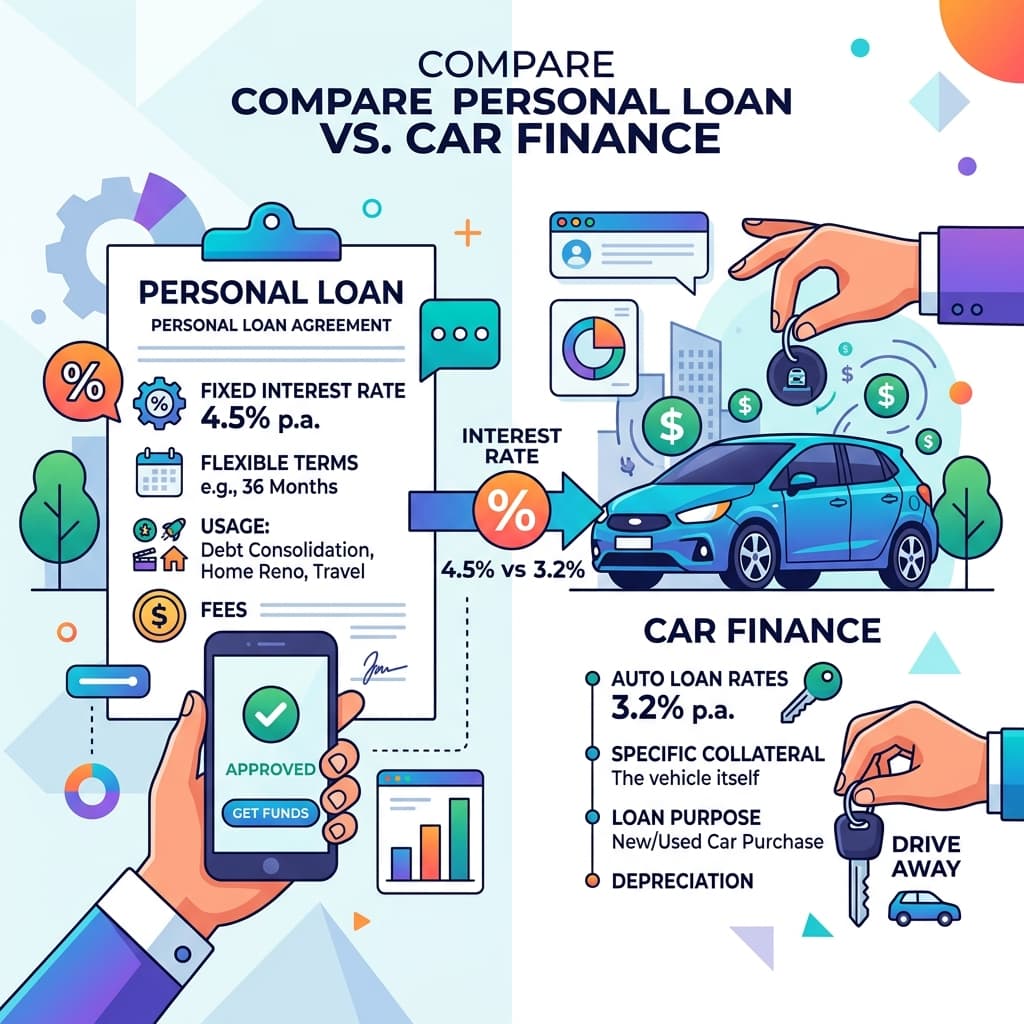
Personal Loan vs Car Loan: Which is Actually Cheaper?

How to Get Out of a Debt Trap: A Step-by-Step Recovery Plan
Was this article helpful?
Financial Insights & Tool Updates
Get practical breakdowns of tax changes, new calculators, and personal finance strategies directly in your inbox.