
Advertisement
A debt trap is not a mathematical problem; it is a behavioral crisis fueled by compound interest.
It starts innocently,a credit card bill you roll over for one month, a quick personal loan to cover an emergency, or a Buy-Now-Pay-Later purchase. Before you know it, 70% of your salary is going toward EMIs, and you are borrowing from Peter to pay Paul.
If you are losing sleep over collection calls and ballooning balances, take a deep breath. You can get out of this. Here is the exact step-by-step framework to escape a debt trap in India.
Key Takeaways
- Stop the Bleeding: You cannot borrow your way out of debt. You must instantly freeze all credit cards and lines of credit.
- The Liquidation Step: Sell off underperforming assets (like gold, low-yield FDs, or even a car) to wipe out 40% interest credit card debt.
- The Repayment Strategy: Use the Debt Avalanche method to mathematically destroy high-interest debt, or a Consolidation Loan to simplify your life.
Step 1: Stop the Bleeding (Freeze New Debt)
The first rule of getting out of a hole is to stop digging.
If you are paying off a credit card bill by taking a cash advance on another credit card, or using an instant loan app to pay a personal loan EMI, you are accelerating your own bankruptcy.
- Delete the Apps: Delete every instant loan app, shopping app, and food delivery app from your phone today.
- Freeze the Cards: Log into your banking app and temporarily block all your credit cards. You cannot be trusted with them right now.
- Switch to Cash/Debit: From this moment on, if you do not have the physical cash or debit card balance for a purchase, you do not buy it.
Step 2: The Brutal Audit
You cannot defeat an enemy you haven't measured. Most people in a debt trap are terrified to look at their total outstanding balances. You must face the math.
Sit down with a spreadsheet or a piece of paper and list every single debt:
- Who you owe (HDFC, Bajaj Finserv, Uncle Rajesh)
- The exact outstanding balance
- The minimum monthly EMI
- The interest rate
Once you have the list, sort it from the highest interest rate to the lowest interest rate. This is your hit list.
To figure out exactly how long it will take to pay off this list based on your current income, use our Debt Payoff Planner:
Case Study: The Snowball Effect in Action
Ravi has 3 debts:
- ₹30,000 Credit Card at 42% interest (Min payment: ₹1,500)
- ₹1,50,000 Personal Loan at 16% interest (EMI: ₹4,500)
- ₹5,00,000 Car Loan at 9% interest (EMI: ₹10,000)
Using the Debt Avalanche Method: Ravi pays the minimum on his car and personal loan. He aggressively throws every single extra rupee he earns (from bonuses or side-hustles) at the Credit Card because its 42% interest is destroying his wealth. Once the card is at ₹0, he takes that ₹1,500 + his extra cash, and aggressively attacks the 16% Personal Loan.
Step 3: Liquidate and Destroy
Before you try to pay off 40% credit card debt with your monthly salary, look at your assets.
Do you have a Fixed Deposit earning 6%? Do you have gold sitting in a locker? Do you have mutual funds earning 12%? Liquidate them.
There is no mathematical universe where it makes sense to keep a mutual fund earning 12% while you are paying 42% interest on a credit card. You are losing 30% of your net wealth every year in the spread.
Sell the assets and instantly wipe out the highest-interest debts on your list.
Step 4: The Debt Consolidation Maneuver
If you have multiple credit cards and personal loans, the sheer number of due dates and interest rates is mentally exhausting.
If your CIBIL score is still intact (above 720), apply for a single Debt Consolidation Loan (a large personal loan). Take a ₹5 Lakh personal loan at 14%, and use it to instantly close all your 36% credit card debts and 24% app loans.
You now have only one EMI to worry about every month, at a drastically lower interest rate.
To see if consolidation will actually save you money, use our Consolidation Calculator:
Step 5: The Debt Avalanche Execution
If you cannot get a consolidation loan, you must use the Debt Avalanche Method.
- Pay the absolute minimum EMI on every single loan on your list. (This protects your CIBIL score from further damage).
- Take every extra Rupee you can find,from cutting expenses, selling items on OLX, or taking a weekend gig,and throw it entirely at the debt with the highest interest rate.
- Once that toxic debt is dead, take the money you were paying toward it and attack the next highest-interest debt.
Action Steps: Dealing with Recovery Agents
If you have already defaulted, recovery agents might be harassing you. Know your rights under RBI guidelines:
- Time Limits: Agents can only call or visit between 8:00 AM and 7:00 PM.
- No Harassment: They cannot use abusive language or humiliate you publicly.
- Restructuring: If you genuinely cannot pay, visit the bank branch manager. Ask for a "Loan Restructuring" or "EMI Moratorium." Banks prefer to recover some money over a longer period rather than writing off the loan completely.
Related Reading
- Debt Avalanche vs Debt Snowball: Which Strategy Wins?
- The Hidden Cost of Minimum Credit Card Payments
- How to Negotiate a Lower Interest Rate on Your Existing Loan
Frequently Asked Questions (FAQs)
What is the core concept behind how to get out of a debt trap a stepbystep recovery plan?
Drowning in personal loans, credit card debt, and EMI defaults? Here is the exact, step-by-step mathematical and psychological framework to escape the debt trap.
Can you explain: Step 1: Stop the Bleeding (Freeze New Debt)?
The first rule of getting out of a hole is to stop digging..
Can you explain: Step 2: The Brutal Audit?
You cannot defeat an enemy you haven't measured.
Grow Your Service Business Online
Spend less time managing appointments and more time growing your business. Accept appointments 24/7, manage walk-ins, schedule staff, and track revenue from one place.
Put this into practice
Use our free interactive calculators to plan every aspect of your finances.
Table of Contents
- Step 1: Stop the Bleeding (Freeze New Debt)
- Step 2: The Brutal Audit
- Case Study: The Snowball Effect in Action
- Step 3: Liquidate and Destroy
- Step 4: The Debt Consolidation Maneuver
- Step 5: The Debt Avalanche Execution
- Action Steps: Dealing with Recovery Agents
- Related Reading
- Frequently Asked Questions (FAQs)
Myat Finance Editorial Team
Financial EducatorsThe Myat Finance editorial team consists of dedicated financial analysts, developers, and educators. Our mission is to make personal finance in India transparent, mathematical, and free from mis-selling. We build data-driven tools and write unbiased guides to help you make smarter money decisions.
Compare Top Loan Offers
Disclosure:These are unbiased affiliate links. We may earn a commission if you open an account, at no extra cost to you. We recommend comparing platforms and selecting the one that best fits your financial needs.
You May Also Like
More articles about Loans & Debt Management

Home Loan EMI on ₹40 Lakh: The Complete Breakdown
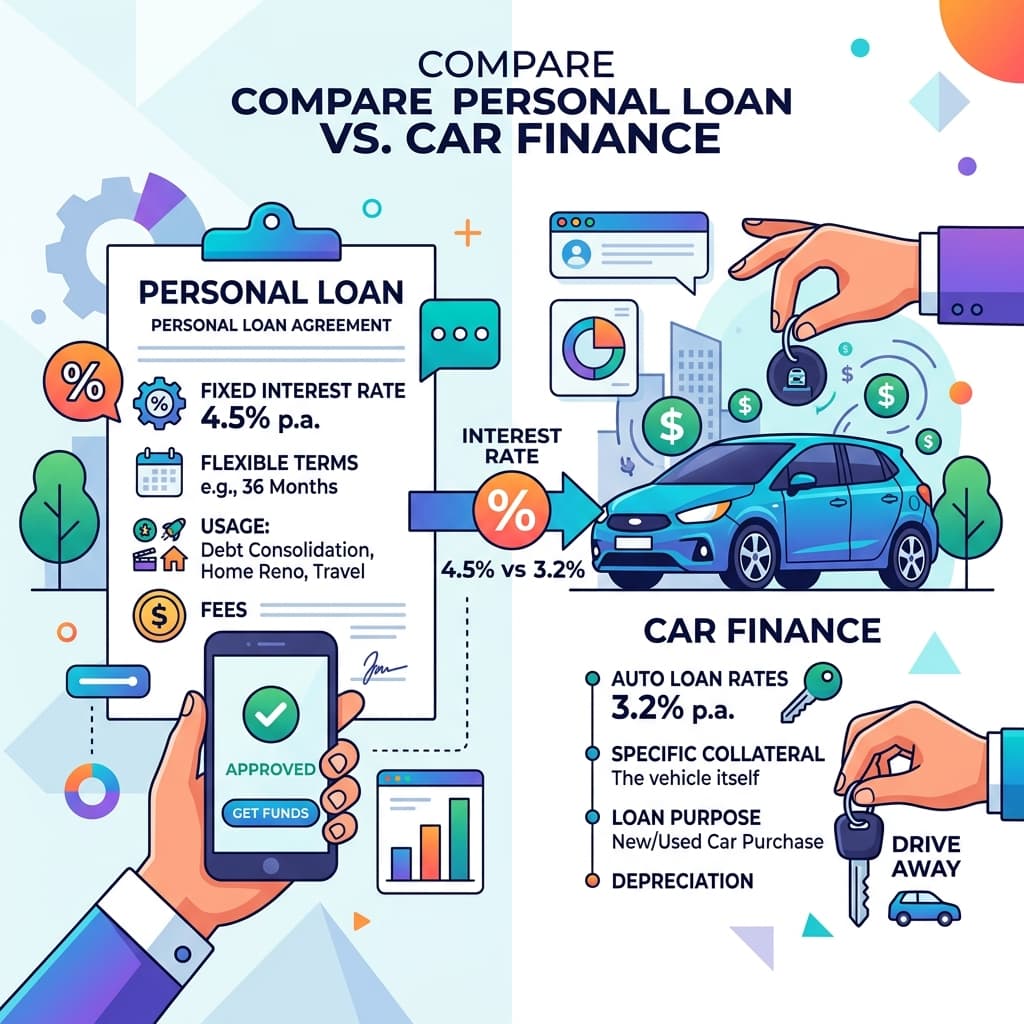
Personal Loan vs Car Loan: Which is Actually Cheaper?

How to Negotiate a Lower Interest Rate on Your Existing Loan
Was this article helpful?
Financial Insights & Tool Updates
Get practical breakdowns of tax changes, new calculators, and personal finance strategies directly in your inbox.