Advertisement
We all know the dilemma of the modern Indian saver. If you leave your money in a standard savings account (at traditional legacy banks), it is highly liquid, meaning you can withdraw it via an ATM at 2 AM. However, it earns a pathetic 2.7% to 3.0% interest, which means inflation is actively destroying its value.
If you move that money into a Fixed Deposit (FD), you can earn 7% interest. However, your money is now locked. If you need it at 2 AM for a medical emergency, you cannot just swipe a debit card. You have to log into net banking, break the FD, pay a 1% penalty, and wait for the money to credit back.
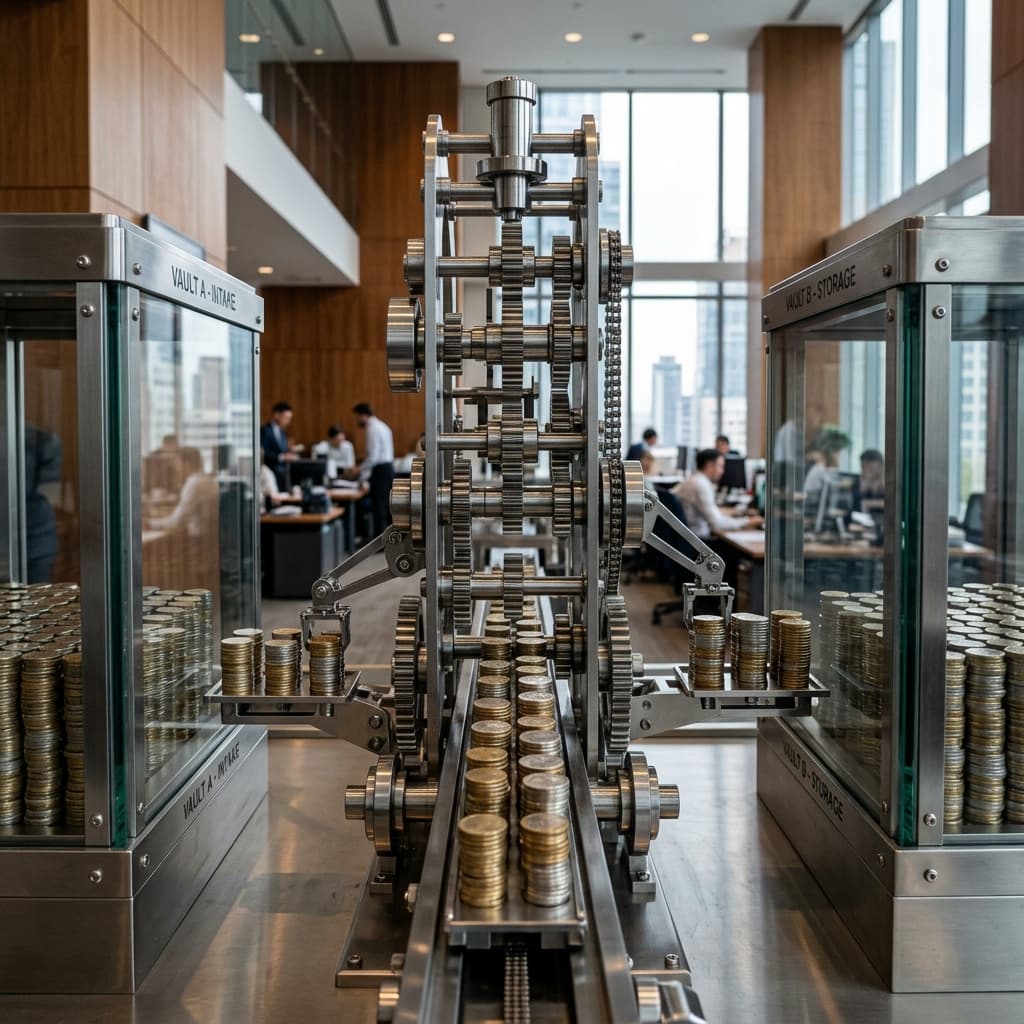
What if you could have the exact 7% interest rate of an FD, combined with the instant ATM liquidity of a savings account?
You can. It is called a Sweep-In Account (or Auto-Sweep Facility), and it is the best-kept secret in Indian banking.
Key Takeaways
- The Best of Both Worlds: An Auto-Sweep facility automatically moves excess cash from your savings account into a temporary FD to earn higher interest.
- Instant Liquidity: If you make a UPI payment or swipe your debit card and your savings balance is zero, the bank automatically "sweeps out" the exact amount needed from the FD instantly, without penalties.
- The Threshold Rule: You define the trigger limit (e.g., ₹25,000). Any rupee above that limit is swept into the FD.
- LIFO Accounting: When sweeping money back out, banks use Last-In-First-Out (LIFO) to ensure your older FDs keep earning maximum interest.
How Does Auto-Sweep Actually Work?
The Auto-Sweep (or Sweep-In/Sweep-Out) facility is a free feature offered by almost every major bank in India, but it is rarely enabled by default. You have to explicitly request it or turn it on via net banking.
Here is the step-by-step mechanics of how it operates:
1. Setting the Threshold
When you activate Auto-Sweep, you set a "Threshold Limit." Let's say you set your threshold at ₹25,000.
2. The Sweep-In (Earning Higher Interest)
On payday, your salary of ₹80,000 is credited to your account. Your account balance is now ₹1,05,000. Because your threshold is ₹25,000, the bank takes the excess ₹80,000 and automatically creates a backend Fixed Deposit for it.
- The ₹25,000 earns standard 3% savings interest.
- The ₹80,000 earns the higher 7% FD interest.
3. The Sweep-Out (Instant Liquidity)
Two weeks later, you need to pay a ₹40,000 hospital bill. You only have ₹25,000 in your main savings balance. If you try to swipe your debit card, the transaction will not fail. The bank will instantly and automatically "sweep out" the missing ₹15,000 from your backend FD to authorize the transaction. The remaining ₹65,000 in the backend FD continues to earn 7% interest uninterrupted.
This process happens in milliseconds. To you, it feels exactly like a normal debit card transaction.
Why You Should Activate It Today
1. It Protects Your Emergency Fund
An Emergency Fund must be highly liquid, but it should also fight inflation. An Auto-Sweep account is arguably the greatest place in India to store an emergency fund. You earn FD-level returns while retaining 24/7 ATM access.
Calculate how much cash should be sitting in your Auto-Sweep account:
2. LIFO (Last-In-First-Out) Optimization
When the bank sweeps money back out to cover a transaction, it breaks the FDs using the LIFO method. If you had a ₹50,000 FD created in January, and a ₹20,000 FD created in March, and you need to sweep out ₹10,000 today, the bank will break it from the March FD. This ensures your oldest money (January) continues compounding at the highest rate without interruption.
The "Catch": What You Need to Know
While Sweep-In accounts are incredible, there are two minor caveats you must be aware of:
- Taxation: The interest earned on the "swept" FDs is treated exactly like normal FD interest. It is added to your taxable income and taxed at your slab rate. Furthermore, if the interest exceeds ₹40,000 in a year (₹50,000 for senior citizens), the bank will deduct 10% TDS.
- Minimum Sweep Amounts: Some banks require a minimum threshold limit (e.g., HDFC Bank often requires a ₹25,000 threshold minimum). Furthermore, the sweep amount is usually moved in multiples of ₹1,000 or ₹5,000.
Action Steps: How to Implement This Today
- Check Eligibility: Log into your net banking portal (or banking app). Search for "Auto-Sweep" or "Sweep-In Facility" in the services menu.
- Set the Threshold: Activate the service and set your threshold. A good rule of thumb is setting the threshold to cover your absolute basic monthly expenses (e.g., ₹25,000 to ₹40,000).
- Automate the Rest: Let the bank handle the backend FD creation. Treat the account normally, and enjoy the higher interest credits at the end of the quarter.
Related Reading
- Fixed Deposit vs Recurring Deposit , Which One Should You Choose?
- Best High-Interest Savings Accounts in India
- Why Your Savings Account Is Actually Losing You Money
Frequently Asked Questions (FAQs)
What is the core concept behind how sweepin accounts work and why you should have one?
Stop settling for 3% interest. Learn how to activate the Auto-Sweep facility on your bank account to earn Fixed Deposit returns while maintaining complete ATM liquidity.
Can you explain: How Does Auto-Sweep Actually Work??
The Auto-Sweep (or Sweep-In/Sweep-Out) facility is a free feature offered by almost every major bank in India, but it is rarely enabled by default.
Can you explain: Why You Should Activate It Today?
An Emergency Fund must be highly liquid, but it should also fight inflation.
Disclaimer: The content provided in this article is for educational and informational purposes only and does not constitute financial, investment, or tax advice. Always consult with a certified financial advisor or a registered tax consultant before making any financial decisions or filing your taxes.
Grow Your Service Business Online
Spend less time managing appointments and more time growing your business. Accept appointments 24/7, manage walk-ins, schedule staff, and track revenue from one place.
Put this into practice
Use our free interactive calculators to plan every aspect of your finances.
Table of Contents
- How Does Auto-Sweep Actually Work?
- 1. Setting the Threshold
- 2. The Sweep-In (Earning Higher Interest)
- 3. The Sweep-Out (Instant Liquidity)
- Why You Should Activate It Today
- 1. It Protects Your Emergency Fund
- 2. LIFO (Last-In-First-Out) Optimization
- The "Catch": What You Need to Know
- Action Steps: How to Implement This Today
- Related Reading
- Frequently Asked Questions (FAQs)
Myat Finance Editorial Team
Financial EducatorsThe Myat Finance editorial team consists of dedicated financial analysts, developers, and educators. Our mission is to make personal finance in India transparent, mathematical, and free from mis-selling. We build data-driven tools and write unbiased guides to help you make smarter money decisions.
Compare Banking & Saving Services
INDmoney
Track Net Worth
Zerodha
Best for Traders
Fiverr
Hire Freelance Experts
Disclosure:These are unbiased affiliate links. We may earn a commission if you open an account, at no extra cost to you. We recommend comparing platforms and selecting the one that best fits your financial needs.
You May Also Like
More articles about Savings & Banking
Dormant and Inactive Bank Accounts , How to Reactivate Them

How to Open a Bank Account for Minors in India

What is CERSAI and Why It Matters for Loan Borrowers
Was this article helpful?
Financial Insights & Tool Updates
Get practical breakdowns of tax changes, new calculators, and personal finance strategies directly in your inbox.